
Author name: sardigital67@gmail.com

AI Is Bringing Back In-Person Interviews
AI Career Survival

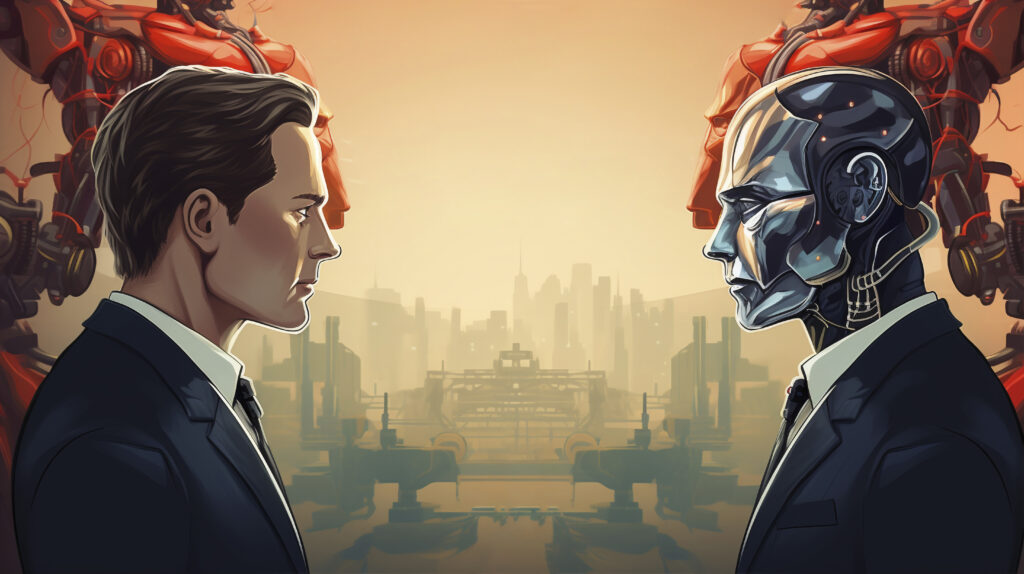
AI Is Forcing the Return of the In-Person Job Interview: Impact on Jobs in the AI Era

For years, job interviews have been going online. Video calls, automated screenings, and tests based on artificial intelligence became the norm.But now, something strange is happening. AI is making it necessary to have job interviews in person again. Companies that used to hire a lot of people remotely are now quietly bringing candidates back into interview rooms. This change isn’t random; it’s a direct response to how AI is affecting jobs, hiring, and how people are evaluated in the AI era. Let’s figure out what’s going on, what it means for jobs, and how you should get ready. Why Businesses Are Going Back to Face-to-Face Interviews Hiring is faster with AI, but it’s also riskier. Candidates can do the following today: ChatGPT can help you answer questions in an interview. Make perfect resumes in just a few minutes Practice your scripted answers over and over. It’s almost impossible to know on video calls: Who really knows how to do it Who is reading answers made by AI Who can really handle pressure In-person interviews take away this fake sense of confidence. AI is great at testing technical skills, but not so good at judging: The way you move your body Talking to each other when you’re stressed Emotional smarts Solving problems for real In the age of AI, these human traits are more important than ever, which is why companies want to talk to people face-to-face again. When lots of people use the same AI tools: Resumes start to look the same The answers sound rehearsed. Creativity goes away In-person interviews help recruiters find people who think outside the box, which AI can’t do. How AI Is Changing Jobs and Interviews at the Same Time AI has changed not only interviews but also what employers look for. Companies Look For In The AI Age: Ability to make decisions Flexibility Thinking critically Being there and talking Making moral decisions It’s hard to judge these things with screens and algorithms. That’s why AI is indirectly pushing businesses to go back to hiring methods that focus on people, like in-person interviews. Jobs That Will Be Affected the Most Not all jobs will require in-person interviews, but roles heavily influenced by AI in jobs are seeing this shift the most. High-Impact Positions: Positions of management and leadership Roles that involve working with clients Sales and marketing Strategy, consulting, and human resources Jobs that require a lot of creativity and decision-making These jobs rely on human judgment as much as they do on technical skills. What This Signifies for AI-Era Job Searchers If you solely depend on: AI-generated resumes Answers that are committed to memory Internet visibility In-person interviews could be difficult for you. The New Actuality: You can be shortlisted by AI, but you can only be hired if you have human skills. How to Get Ready for Face-to-Face Interviews in the AI Age Here’s how to maintain your lead: Instead of pretending to be an expert, use AI to learn more quickly. Anticipate: Examples of cases Follow-up inquiries Unpredictable dialogue AI cannot assist you when interacting with people in real time. Work on: Speaking clearly Self-assurance Ability to listen Body language These abilities are starting to define careers. Businesses detest blind reliance rather than AI. Prepare an explanation: How AI can be used as a tool How to confirm AI results How human judgment is added The Bigger Picture: AI is redefining jobs rather than eliminating them. One thing is demonstrated by the return of the in-person job interview: Those who can combine strong human skills with AI skills will be the ones of the future. AI-era jobs will compensate: Thinkers rather than followers Flexible brains over pre-written responses AI users who don’t hide behind it
AI Career Survival

How to Use ChatGPT to Write a Resume That Actually Gets You Hired (2025 Guide)

Your resume is getting ghosted. Here’s why—and how to fix it with AI. Let’s be real: you’ve applied to 50+ jobs, tailored your resume (or so you thought), and heard back from… nobody. Radio silence. Not even a rejection email. Here’s the brutal truth: your resume never made it to a human. It got filtered out by an ATS (Applicant Tracking System)—the robot gatekeepers that scan resumes for keywords before recruiters even see them. 99.7% of recruiters use keyword filters in their ATS to sort and prioritize applicants 2025 Gen Z Career Prospects Report – Resume Genius. But here’s the good news: you can use AI to beat AI. ChatGPT can help you write an ATS-friendly resume that actually gets past the robots and lands on a recruiter’s desk. And I’m about to show you exactly how to use ChatGPT for resume writing. No fluff. No theory. Just copy-paste ChatGPT resume prompts and actionable resume hacks that actually work. What is ATS and Why is It Killing Your Job Applications? An ATS (Applicant Tracking System) is software that businesses use to automatically scan, rank, and filter resumes before any human sees them. Here’s how ATS functions: 1. You (the candidate) apply by submitting a resume online,2. The ATS scans the resume for valuable information, analyzes it, ranks your application based on how well it meets the job criteria,3. Recruiters see only the highest-ranked resumes,4. All other candidates are auto-rejected (and likely that’s you). Here’s what ATS looks for: 1. Keywords from the job description,2. Simple formatting without fancy graphics or strange fonts,3.  Relevant experience based on the requirements of the position,4. Skills section with exact wording from the job description. What the ATS kills your resume for: 1. Fancy templates with graphics, tables, or columns,2.  Where the header/footer has important information,3. Using uncommon fonts or formatting,4. Missing keywords in the job post,5. Using a generic, cookie cutter approach. The reality is it is strong ATS resume scoring is typically 80% or higher, most resumes score much lower, and never even make it to the humans review. The simple answer is use ChatGPT to fix and optimize every section of your resume for ATS, while also making it readable for humans. Step 1: Feed ChatGPT Your Basic Info (The Foundation) Before you start, gather: Your work experience (job titles, companies, dates, responsibilities) Your education and certifications Key skills and tools you know The job description you’re applying for ChatGPT Prompt 1: Create Your Master Resume I need help creating a master resume. Here’s my background: – Current/most recent job: [Job Title] at [Company] from [Dates]– Key responsibilities: [List 3-5 main duties]– Previous job: [Job Title] at [Company] from [Dates]– Key responsibilities: [List 3-5 main duties]– Education: [Degree], [School], [Year]– Skills: [List technical and soft skills]– Certifications: [Any relevant certs] Please create a structured resume with Professional Summary, Experience, Education, and Skills sections. Use action verbs and quantify achievements where possible. Step 2: Optimize for the Specific Job (ATS Keyword Magic) This is where most people fail. Generic resumes get auto-rejected. You need to customize for EVERY job you apply to. ChatGPT Prompt 2: Tailor Your Resume to the Job Description I’m applying for [Job Title] at [Company]. Here’s the full job description: [Paste entire job description here] Here’s my current resume: [Paste your resume] Please rewrite my resume to:1. Include keywords from the job description naturally2. Emphasize experiences that match their requirements3. Ensure it’s ATS-friendly (no special characters, clear formatting)4. Keep it to one page if possible5. Make sure every bullet point shows impact with metrics Step 3: Write Killer Bullet Points (Show Results, Not Duties) Bad bullet point: “Responsible for managing social media accounts” Good bullet point: “Increased Instagram engagement by 340% in 6 months through data-driven content strategy and influencer partnerships” ChatGPT Prompt 3: Transform Boring Bullets into Power Statements Rewrite these resume bullet points to be more impactful and results-oriented. Use strong action verbs, include quantifiable metrics, and show business impact: [Paste your current bullet points] Focus on achievements rather than responsibilities. If I don’t have specific numbers, suggest ways to estimate or frame the impact. Action Verbs ChatGPT Loves to Use: Led, Spearheaded, Drove, Executed Optimized, Streamlined, Enhanced, Transformed Generated, Increased, Reduced, Achieved Collaborated, Coordinated, Facilitated Step 4: Craft a Professional Summary That Hooks Recruiters spend about 7.4 seconds reviewing your resume. Your summary needs to grab attention FAST. ChatGPT Prompt 4: Create a Compelling Professional Summary Write a 3-4 sentence professional summary for my resume. I’m applying for [Job Title]. My background includes: – [Years] of experience in [Industry/Field]– Key strengths: [List 3-4 main skills]– Notable achievements: [1-2 major accomplishments]– Career goal: [What you’re looking for] Make it ATS-friendly with relevant keywords but also engaging for human readers. Tone should be confident but not arrogant. Step 5: Skills Section Optimization (Keywords That Matter) The Skills section is ATS gold. This is where you load up on keywords. ChatGPT Prompt 5: Build a Keyword-Rich Skills Section Based on this job description: [Paste job description] And my background: [Brief summary of your experience] Create a comprehensive Skills section for my resume. Organize it into:1. Technical Skills2. Tools & Software3. Soft Skills Use exact terminology from the job posting and prioritize the most important skills first. Pro Tip: Don’t lie about skills, but if you have basic knowledge of something they’re asking for, include it. You can always learn more before the interview. Step 6: Format for ATS Success (The Technical Stuff) ATS-Friendly Resume Rules: ✅ Use standard section headers: “Work Experience,” “Education,” “Skills” (not creative alternatives)✅ Stick to common fonts: Arial, Calibri, Georgia, Times New Roman✅ Keep it simple: No tables, text boxes, graphics, or columns✅ Use standard bullet points: Not fancy symbols✅ Save as .docx or PDF: Check job posting for preference✅ One page for <10 years experience: Two pages max for senior roles ChatGPT Prompt 6: ATS Compliance Check Review my resume for ATS compatibility. Check for:– Non-standard formatting that might confuse ATS– Missing keywords

AI Career Survival

7 Jobs AI Can’t Steal From You (No Matter How Smart It Gets)

  Stop panicking. Start planning. I understand. You’ve seen the headlines. “AI Will Replace 80% of Jobs!” “ChatGPT Can Do Your Work Better Than You!” Your group chat is probably filled with memes about robots taking over, and the anxiety is real. But here’s what nobody’s telling you: AI isn’t coming for every job. Some careers are AI-proof and automation-resistant, and chances are, you’re already closer to one than you think. Let me break it down for you—no boring corporate talk, just straight facts about the jobs AI can’t replace and future-proof careers that will still be thriving when your kids are applying to college. 1. Healthcare Workers (Nurses, Therapists, Caregivers) Why AI Can’t Touch This: AI can read X-rays and suggest diagnoses, sure. But can it hold someone’s hand when they’re scared before surgery? Can it sense when a patient is lying about taking their meds? Can it provide your grandma with the kind of care that makes her actually want to get better? Nope. Healthcare jobs are AI-resistant because they’re not just about data—they’re about human connection. Nurses don’t just administer medication; they comfort, advocate, and read between the lines when patients can’t articulate what’s wrong. That’s emotional intelligence meets medical expertise, and AI can’t replace that combo. Real Talk: The healthcare industry is projected to add MILLIONS of automation-proof jobs in the next decade. If you can handle bodily fluids and genuinely care about people, you’ve got job security for life. 2. Creative Directors & Strategic Thinkers Why AI Can’t Touch This: AI can generate a logo. AI can write ad copy. But AI can’t sit in a room with a frustrated client and say, “I know what you asked for, but here’s what you actually need. Creativity isn’t just making pretty things it’s solving problems in ways nobody’s thought of yet. It’s understanding culture, reading the room, predicting what’ll go viral, and knowing when to break the rules. ChatGPT can remix what already exists. It can’t pioneer what doesn’t exist yet. That’s where creative directors, brand strategists, and innovative thinkers come in—making these AI-proof creative careers. The Vibe: If you’re the person in your friend group who always comes up with the best party themes or knows exactly how to fix someone’s Insta aesthetic—this might be your lane. Creative jobs and strategic thinking roles are among the careers AI can’t replace. 3. Skilled Trades (Electricians, Plumbers, HVAC Techs Why AI Can’t Touch This: When your toilet explodes at 2 AM, you’re not calling a robot. You’re calling a plumber with a van, tools, and the ability to navigate your sketchy basement without freaking out. Skilled trades require physical problem-solving in unpredictable environments. Every house is different. Every electrical system has its quirks. AI loves patterns and predictability. Trades work is chaos + expertise—making electrician jobs, plumber careers, and HVAC technician roles some of the most automation-resistant careers. Plus, these high-paying jobs without a degree pay REALLY well, often don’t require a 4-year college education, and have insane demand. We’re talking $60K-$100K+ salaries with job openings everywhere. These are true future-proof skilled trades. Hot Take: Stop sleeping on trade schools. While your friends are drowning in student loans, you could own a business at 25. Skilled trades careers offer immediate income and long-term job security 4. Teachers & Educators (The Real Ones) Why AI Can’t Touch This: AI can provide information. Platforms like Khan Academy and YouTube already do that. But teaching isn’t just about pouring facts into kids’ heads; it involves mentorship, motivation, and believing in someone until they believe in themselves. Good teachers notice when a student is struggling at home. They adapt their teaching style during a lesson when the class isn’t grasping the material. They inspire career paths, build confidence, and sometimes become the only stable adult in a child’s life. This human connection in learning is something AI tutors and educational technology can’t fully replace. Yes, AI in education can assist with homework and even offer personalized learning, but it can’t change lives the way the role of teachers does. The impact of good teachers goes beyond academics—they shape futures, guide students, and provide mentorship in education that technology simply cannot replicate. Teaching is tough and often overlooked, but if you’ve ever helped someone truly understand something and felt that rush, you know that’s what the job is about. The importance of teachers in society is priceless, and while the future of teaching may involve AI, the value of teachers will always remain irreplaceable. 5. Mental Health Professionals (Therapists, Counselors, Coaches) Why AI Can’t Touch This: There are AI therapy bots. They’re cheap, available 24/7, and honestly? They’re decent for venting. But here’s what they can’t do: build trust. Feel the weight of your silence. Pick up on the tiny shift in your tone that means you’re not okay. Challenge you in ways that actually create breakthroughs. Therapy jobs and mental health careers are deeply human work. They require emotional intelligence, empathy, lived experience, and the ability to hold space for someone’s pain without trying to “fix” it immediately. Therapist careers, counseling jobs, and life coaching roles remain firmly AI-proof. The Growth: Mental health careers are EXPLODING right now. Gen Z is therapy-positive, companies are investing in employee wellness programs, and the stigma is fading. If you’re a good listener with strong boundaries, this high-demand career field needs you. These are some of the fastest-growing careers AI can’t replace. 6.Sales & Relationship Managers (The Ones Who Actually Care) Why AI Can’t Touch This: AI can send follow-up emails and track leads. But closing a $50K deal? That’s about reading people, building trust, and knowing when to push and when to back off. Sales careers aren’t just pitching—they’re about understanding client psychology, adapting on the fly, and creating genuine relationships. The best salespeople don’t just sell products; they solve problems and become trusted advisors. B2B sales jobs, real estate careers, and luxury sales positions will always need humans who can connect authentically

Scroll to Top